
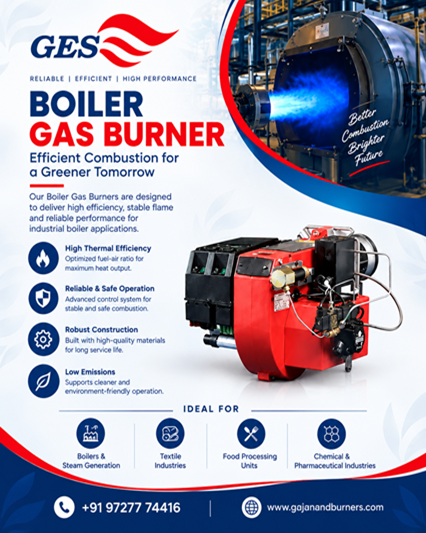
Boiler Gas Burner: Complete Guide to Industrial Combustion Systems
Introduction
In today’s competitive industrial landscape, energy efficiency and reliable performance are top priorities for every manufacturing unit. Whether you’re involved in steam generation, textile processing, food manufacturing, or pharmaceutical production, an efficient combustion system directly impacts your operational costs and output quality. This is where the Boiler Gas Burner plays a game-changing role.
In this blog, we’ll explore in detail what a boiler gas burner is, how it works, its key benefits, and how to choose the right gas burner for your industry.
What is a Boiler Gas Burner?
A boiler gas burner is a combustion device that mixes fuel — such as natural gas or LPG — with air in an optimal ratio to generate a controlled flame. This flame produces heat inside the boiler, which is then used for steam or hot water generation. Modern gas burners are designed with advanced control systems that precisely regulate the fuel-air mixture to ensure maximum thermal efficiency and minimum emissions.
Compared to traditional oil-based or solid-fuel burners, gas burners are cleaner, more efficient, and safer to operate — which is why industries are rapidly adopting them today.
Key Features of a Boiler Gas Burner
A high-quality gas burner should have certain essential features that determine its performance and longevity:
1. High Thermal Efficiency — An efficient gas burner optimizes the fuel-air ratio to deliver maximum heat output with minimum fuel consumption. This directly reduces operating costs while ensuring stable, consistent flame quality throughout the combustion process.
2. Reliable and Safe Operation — Advanced control systems continuously monitor and regulate combustion parameters, ensuring stable operation even under varying load conditions. Built-in safety mechanisms detect flame failure, pressure fluctuations, or ignition issues instantly, preventing accidents and equipment damage.
3. Robust Construction — Industrial-grade gas burners are built using high-quality materials designed to withstand continuous operation, high temperatures, and demanding industrial environments — resulting in a longer service life and reduced maintenance costs.
4. Low Emissions — With rising environmental regulations, low-emission combustion technology has become essential. A well-designed gas burner supports cleaner combustion, helping industries meet environmental compliance standards while contributing to a greener future.
How Does a Boiler Gas Burner Work?
The working process of a boiler gas burner can be broken down into a few key stages:
- Fuel Supply – Natural gas or LPG is supplied to the burner through a regulated gas line.
- Air Intake – A blower or fan draws in the required amount of air for combustion.
- Fuel-Air Mixing – The fuel and air are mixed in the correct ratio inside the burner head.
- Ignition – An ignition system (electric spark or pilot flame) ignites the mixture, creating a stable flame.
- Combustion Monitoring – Sensors continuously monitor flame stability, temperature, and pressure to maintain safe and efficient operation.
- Heat Transfer – The generated heat is transferred to the boiler, producing steam or hot water for industrial use.
This entire process is automated in modern burners, ensuring consistent performance with minimal manual intervention.
Benefits of Using a Boiler Gas Burner
Improved Energy Efficiency — Gas burners are known for their superior combustion efficiency compared to other fuel types. This means more heat output for the same amount of fuel, directly translating into lower energy bills.
Reduced Environmental Impact — Natural gas combustion produces significantly lower carbon emissions, particulate matter, and sulfur compounds compared to oil or coal. This makes gas burners an environmentally responsible choice for industries aiming to reduce their carbon footprint.
Lower Maintenance Requirements — Since gas burns cleaner than other fuels, there’s less soot and residue buildup inside the boiler and burner components. This reduces the frequency of maintenance and extends the lifespan of the equipment.
Enhanced Safety — Modern gas burners come equipped with multiple safety features, including flame failure detection, automatic shut-off systems, and pressure monitoring — significantly reducing the risk of accidents in industrial settings.
Cost-Effective Operation — Lower fuel consumption, reduced maintenance costs, and longer equipment life all contribute to a lower total cost of ownership over the burner’s operational lifetime.
Consistent Performance — Advanced control systems ensure that the burner maintains stable flame characteristics even during load fluctuations, ensuring consistent product quality in applications like food processing or textile manufacturing.
Industries That Benefit from Boiler Gas Burners
Boiler gas burners are versatile equipment used across a wide range of industries:
Boilers & Steam Generation — Power plants, utility companies, and manufacturing facilities rely on boiler gas burners for efficient steam generation, which powers turbines, heating systems, and various industrial processes.
Textile Industries — Textile manufacturing requires consistent heat for dyeing, drying, and finishing processes. Gas burners provide the stable thermal output needed to maintain fabric quality throughout production.
Food Processing Units — In the food industry, precise temperature control is critical for cooking, sterilization, pasteurization, and drying processes. Gas burners offer clean, reliable heat that meets strict food safety and hygiene standards.
Chemical & Pharmaceutical Industries — Chemical and pharmaceutical manufacturing often requires precise thermal control for reactions, distillation, and sterilization processes. The reliability and clean combustion of gas burners make them ideal for these sensitive applications.
Why Choose the Right Gas Burner Matters
Selecting the right boiler gas burner isn’t just about capacity — it’s about matching the burner’s specifications to your specific operational needs. Here are a few factors to consider:
- Boiler Compatibility – Ensure the burner is compatible with your existing boiler type and capacity.
- Fuel Type Availability – Check whether natural gas or LPG is readily available and cost-effective in your location.
- Load Requirements – Consider your facility’s heat demand, including peak load conditions.
- Control System Sophistication – Advanced modulating burners offer better efficiency than simple on/off burners, especially for facilities with variable heat demands.
- After-Sales Support – Choose a manufacturer that offers reliable technical support, spare parts availability, and maintenance services.
If you’re unsure which model fits your plant, browse our full range of industrial burners or speak to our engineering desk for a free spec-matching consultation.
Maintenance Tips for Boiler Gas Burners
To ensure long-term efficient operation, regular maintenance is essential:
- Regular Inspection – Periodically check the burner nozzle, ignition electrodes, and flame sensors for wear or damage.
- Clean Air Filters – Ensure air intake filters are clean to maintain proper fuel-air ratio.
- Check Gas Pressure – Monitor gas supply pressure regularly to ensure consistent combustion.
- Calibrate Controls – Periodically calibrate control systems to maintain optimal efficiency.
- Professional Servicing – Schedule annual servicing by qualified technicians to identify and address potential issues before they become major problems.
The Future of Combustion Technology
As industries move toward more sustainable practices, boiler gas burners represent an important step in reducing environmental impact while maintaining operational efficiency. With continuous advancements in combustion technology, modern burners are becoming increasingly efficient, offering better fuel economy and even lower emissions.
Manufacturers are also integrating smart monitoring systems that allow real-time tracking of burner performance, enabling predictive maintenance and further optimizing energy consumption. This trend toward digitalization and automation is set to make gas burners even more valuable for industries focused on operational excellence and sustainability.
Conclusion
A high-quality boiler gas burner is a critical investment for any industry that relies on steam or heat generation. With benefits like high thermal efficiency, reliable and safe operation, robust construction, and low emissions, gas burners offer a compelling combination of performance, safety, and environmental responsibility.
Whether you’re in boiler and steam generation, textile manufacturing, food processing, or chemical and pharmaceutical production, choosing the right gas burner can significantly improve your operational efficiency while reducing costs and environmental impact.
For industries looking for reliable, efficient, and high-performance boiler gas burners, working with an experienced manufacturer ensures you get equipment built to last, backed by proper technical support and service. Explore our complete product catalog for genuine spares and combustion automation solutions across 18+ global brands.h an experienced manufacturer ensures you get equipment built to last, backed by proper technical support and service.
Frequently Asked Questions (FAQs)
1. What is a boiler gas burner used for?
- A boiler gas burner is used to generate controlled combustion by mixing fuel (natural gas or LPG) with air, producing heat for steam or hot water generation in industrial boilers. It’s widely used in power plants, textile mills, food processing units, and chemical industries.
2. How does a boiler gas burner work?
- It works by drawing in fuel and air, mixing them in the correct ratio inside the burner head, and igniting the mixture to create a stable flame. Sensors continuously monitor flame stability, pressure, and temperature to ensure safe and efficient combustion.
3. What fuels can a boiler gas burner use?
- Most boiler gas burners are designed to run on natural gas or LPG (liquefied petroleum gas). Some models offer dual-fuel capability, allowing flexibility between gas and other fuel sources depending on availability and cost.
4. Are gas burners more efficient than oil burners?
- Yes. Gas burners generally offer higher combustion efficiency, cleaner burning, and lower maintenance requirements compared to oil-based burners, since gas produces less soot and residue buildup.